


Pokémon Champions
4.74.24K Reviews
App Specs
- Version
- 1.2.2
- Updated On
- License
- Free
- Downloads
- 5,000,000+
- Developer
- The Pokémon Company
- Categories
- Strategy
- Platform
- Android
Screenshots
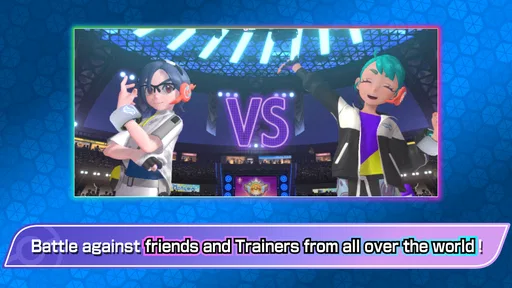

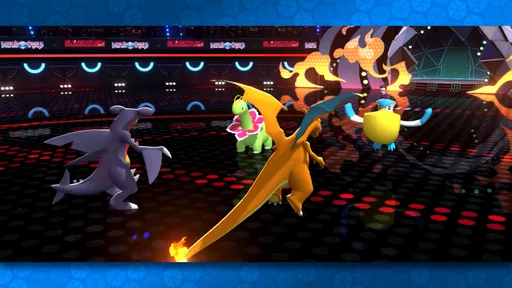

 Analysis by AppCompare
Some Pokémon games ask me to explore, collect, and follow a long adventure; Pokémon Champions makes its appeal much more direct. It is a strategy game built around familiar Pokémon battles, so the main attraction is choosing how to approach a matchup rather than wandering through a large world. I like that focus: it gives the game a clear identity for players who want the decision-making of a Pokémon fight without needing every session to become a lengthy campaign.
A battle-first game for the time you have
I see the strongest everyday use case as a short window when I want to make active choices rather than simply fill time: a break between tasks, a quiet ride, or a few minutes before putting my phone away. The appeal is not that every session must be brief, but that the central activity is immediately clear. If I have time for one focused battle, I can spend it thinking about a matchup instead of working through a long sequence of exploration first.
That makes it a better fit for someone who already enjoys Pokémon battles than for someone who mainly likes collecting, discovery, or story. If you are deciding whether to try it, ask yourself which part of Pokémon you return for most often. A player who enjoys weighing options and anticipating an opponent has a reason to stay; someone who wants a broad adventure may be happier with a traditional series game.
Every choice starts with the matchup
The interesting part of a Pokémon battle is rarely just picking a favorite and pressing an attack. I’m weighing what the opponent might do, what I can safely reveal, and whether a short-term advantage is worth giving up flexibility later. That familiar tension is the right place for a battle-focused strategy game to shine, and it’s also what makes each decision feel personal. A choice that looks strong in isolation can be poor once I consider the opponent’s likely response.
The useful habit here is to think in plans, not single turns. Before committing to an action, I try to ask what I want the next position to look like. Am I trying to create pressure, preserve options, or avoid letting the opponent dictate the pace? That kind of question helps me make more deliberate choices instead of treating each turn as a guess. It also gives a loss more value: I can often identify a decision that was too eager or a plan that depended on the opponent cooperating.
Because the battles draw on the Pokémon series, the strategic language feels familiar to longtime players. That familiarity is welcoming, but it can also tempt me to assume that what worked in another Pokémon game will always be the right answer here. A battle-focused format puts more emphasis on reading the immediate situation. I get the most out of it when I stay curious about the opponent’s choices rather than relying on a favorite tactic automatically.
Build a plan that can survive a surprise
A practical way to approach a matchup is to separate the plan into a first move and a fallback. I might have an opening idea, but I also want to know what I’ll do if the opponent responds in an unexpected way. That small mental preparation makes a difference because it keeps me from spending every turn reacting in a hurry. I can still adapt, but I’m not starting from zero whenever the battle shifts.
Worth Reading Before You Choose

Flipboard Shows What News Apps Must Do Beyond the Feed

Switching to Android Auto Means Rethinking Your Driving Routine

Google Calendar Makes a Crowded Week Easier to Manage

Ludo King Makes the Most of the Minutes Between Plans

Baby Panda World Brings Quick Play to Modern Phones, but Its Game Library Feels Busy

ESPN’s Live Game View Makes Following Close Games Easier
This is also a good game for players who enjoy thinking through tradeoffs. If I commit to one line of play, I may gain pressure while losing the freedom to respond elsewhere. If I play cautiously, I may preserve choices but allow the opponent to take control. Neither approach is automatically correct. The satisfying part is judging which risk fits the position in front of me.
Risk feels different when every choice gives something up
Strategy games can make bold play feel exciting, but boldness is not the same as good planning. In Pokémon battles, a tempting action can expose a weakness or make my next decision easier for the opponent to predict. I try to ask not just, “Can this work?” but, “What happens if it doesn’t?” If the answer leaves me with no useful response, the payoff may not justify the gamble.
The reverse is true as well: avoiding every risk can hand the other player room to act. A safe choice may protect me now but leave me without a route to turn the battle around. I find it more useful to take risks when I understand what I’m risking and have a reason for doing so. That mindset makes the game feel less like a coin toss and more like a series of connected decisions.
One tradeoff worth watching is the difference between a favorite Pokémon and a useful role in a plan. Familiarity makes it easy to lean on the same choices, but a team or approach built only around comfort can become predictable. I don’t need to abandon the Pokémon I like; I need to consider what each choice contributes and whether the rest of my plan can cover its weak spots. That is a more satisfying way to improve than simply chasing whatever seems strongest.
Adaptation matters more than repeating a comfortable opening
When an opening works, it’s tempting to repeat it unchanged. But an opponent who has seen that approach may respond differently, and even a familiar matchup can take a new shape once one early decision changes. I treat an opening as a test of the situation, not a script I must follow. If the opponent shows a different priority than I expected, I want to adjust rather than force the original plan.
A useful post-battle routine is to review one turning point instead of trying to explain the entire result at once. Which choice made the rest of the battle harder? Did I commit before I had enough information, or hold back when I needed to apply pressure? This makes practice more manageable, especially in short sessions. I can carry one specific lesson into the next battle rather than vaguely resolving to “play better.”
That approach is especially helpful for players new to strategy games. Pokémon familiarity lowers the barrier to understanding why a matchup matters, but it doesn’t remove the need to learn how to plan around uncertainty. I’d suggest starting with a simple goal for each battle—such as keeping options open or noticing how the opponent responds—rather than trying to master every possible interaction immediately.
Good for focused sessions, less suited to a long adventure
In everyday use, I can imagine opening the game during a break, playing a battle-focused session, and leaving with one decision to think about afterward. It suits someone who enjoys compact strategic problems and wants the Pokémon battle format at the center. I would not choose it when I’m looking for exploration, a story-led journey, or the feeling of steadily uncovering a large world. Those are different pleasures, and a focused battle game should not be judged as though it were trying to replace them.
Compared with a broader Pokémon adventure, this puts less emphasis on the journey around the battles and more on the battles as the main event. Compared with a general strategy game, the recognizable Pokémon setting gives matchups an approachable frame, especially if I already enjoy thinking about how different choices interact. The tradeoff is that players who want a relaxed collection loop or a long narrative may find the central focus too narrow.
It also asks for a different kind of patience than a casual game. A quick session can still leave me thinking about a decision, and improving means accepting that I won’t always know the right answer in advance. If I want a game where progress comes mainly from switching off and watching things unfold, this would not be my first recommendation. If I enjoy testing an idea, noticing a counter, and refining my plan, the focus makes sense.
What the package says about its audience
The Pokémon Company is behind the game, and its positioning is easy to understand: this is a strategy title for players drawn to familiar Pokémon battles. It is free to start, carries an Everyone age rating, and includes in-app purchases priced from $4.99 to $49.99 per item. I’d keep the purchase question separate from the strategic appeal. The game’s core attraction is the battle decision-making; anyone considering optional spending should decide what they personally value rather than assuming purchases are necessary to enjoy that focus.
Its audience figures suggest that it has reached a substantial group of players: it has a 4.7 average from around 241,000 ratings, with more than five million installs. I take that as a sign that the concept has broad appeal, not as a guarantee that every player will enjoy the same pace or style. The key question is whether I want Pokémon battles to be the main activity, rather than one part of a bigger adventure.
For people checking compatibility and upkeep, the release date is June 11, 2026, and the current version is 1.2.2. Those details are useful context, but they don’t change the basic choice: this is for someone who wants to focus on tactical Pokémon matchups. I’d be cautious about treating a version number as evidence that the game will suit my preferences; the best test is whether I enjoy thinking through battle plans and adapting when they stop working.
Depth comes from learning, not from one perfect answer
The long-term appeal of a strategy game is often the gap between what I understand at first and what I notice after repeated play. Here, that can mean becoming more careful about risk, spotting when a familiar opening has become predictable, and learning to keep a backup plan ready. I don’t need to expect every battle to reveal a dramatic new trick. Small improvements in judgment can be satisfying because they change how I approach the next matchup.
There is a limit to that appeal. If I dislike revisiting decisions or feel frustrated when a plan gets countered, a battle-centered game can feel demanding even when a session is short. I also wouldn’t recommend it as a substitute for the full range of activities in a traditional Pokémon adventure. Its narrower focus is a strength for the right player and a real limitation for someone who wants variety between battles.
My practical advice is to play with one question in mind, then reflect on the answer. For example, did I choose a line because it fit the position, or because it was the move I always make? Did I leave myself a response if the opponent disrupted my plan? These questions turn familiar battles into a useful exercise in decision-making, and they’re concrete enough to apply in the next session.
A focused recommendation for battle-minded Pokémon fans
Pokémon Champions is best for me when I want the Pokémon battle itself to be the point: reading a matchup, balancing risk against flexibility, and changing course when the opponent surprises me. It offers a clear strategic focus and a familiar setting, while asking players to bring patience and a willingness to learn from setbacks. I’d recommend it to battle-minded Pokémon fans and strategy players who enjoy planning under uncertainty.
I’d skip it if what I want most is a sprawling story, exploration, or an easygoing activity that asks little of me. The free entry makes it approachable, but the in-app purchase range is worth keeping in mind, and I wouldn’t spend simply because an option is available. Go in for the decisions, not the expectation that it will provide every kind of Pokémon experience.
For the right player, its strongest quality is that a battle can leave me with something useful to consider after it ends. I can refine an opening, rethink a risk, or prepare a better fallback next time. That steady process—not a promise of effortless wins—is why I’d return to it.
Deciding whether to settle in
If I were introducing it to a friend, I’d suggest treating the first sessions as a test of fit rather than a verdict on skill. Pick one thing to pay attention to—whether an opening leaves a fallback, for instance—and see if that kind of thinking is enjoyable. If it is, the game has room to reward more deliberate play; if every counter feels like unwanted homework, there is no need to force it.
That is also why I would not choose it as a universal recommendation for a Pokémon fan. Familiar characters and battles provide an inviting starting point, but the central loop favors people who like making decisions under pressure. For players who want a contained strategic activity, that focus is the reason to try it. For those who want a changing mix of exploration, story, and collection, another kind of Pokémon game is likely the better use of their time.
Pros
- Core battles focus on Pokémon matchups and turn-based strategy.
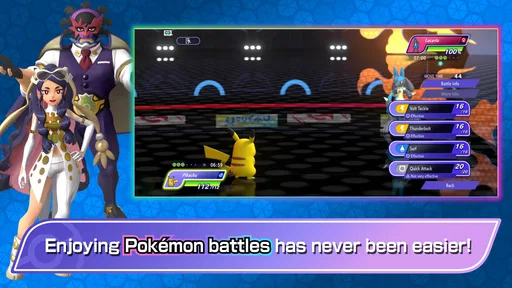
- A clear interface makes move selection and battle status easy to follow.
- Online battles let players test teams against other trainers.
- The familiar Pokémon roster adds appeal for long-time series fans.
- Short matches make it convenient to play in brief sessions.
Cons
- The battle-focused format may feel limited to players seeking exploration.
- Competitive play can be difficult for newcomers to learn.
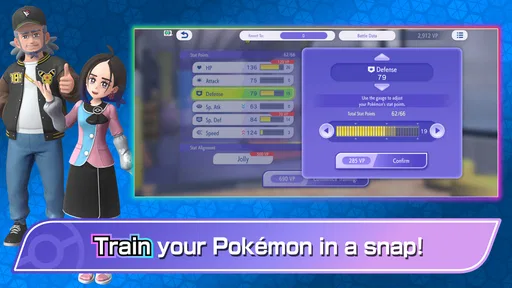
- Team building and strategy may require time before battles feel rewarding.
- Online features depend on a stable internet connection.
- The experience may have less appeal for players unfamiliar with Pokémon.
FAQs for Pokémon Champions
What is Pokémon Champions?
Pokémon Champions is a battle-focused Pokémon game built around assembling teams and competing in strategic turn-based battles. Rather than centering on a traditional journey through a region, it emphasizes choosing Pokémon, planning moves, and testing your team against other players or available in-game opponents. The exact modes and features can depend on the game version and updates, so check the official store listing for current details before downloading.
Is Pokémon Champions free to download, and does it include in-app purchases?
Availability, pricing, and purchase options can vary by platform and region. Before installing, review the official Google Play or Apple App Store listing to confirm whether the game is free to download, whether it offers optional in-app purchases, and whether any paid content is available. Also check the listed age rating and purchase controls, especially if a child will play or if your device is shared with family members.
Can I play Pokémon Champions offline?
Do not assume that Pokémon Champions can be played fully offline. A battle-focused game may require an internet connection for online matches, account services, updates, or other features, and some functions may be unavailable when you are disconnected. Check the store description and in-game notices for the current connection requirements. If you expect to play while traveling, confirm which features work offline before relying on them.
Can I transfer Pokémon from other Pokémon games into Pokémon Champions?
Compatibility with other Pokémon games or services should be verified before you plan a team around Pokémon you already own. Transfer options can depend on the supported games, account requirements, regional availability, and current software updates; they may not include every Pokémon or provide a one-way transfer back. Consult official Pokémon Champions guidance and the relevant service’s instructions to confirm what is supported before linking accounts or moving Pokémon.
What should I check before downloading Pokémon Champions on my phone?
Check the official store page for your device’s supported operating-system version, storage requirements, age rating, and any stated network needs. Because game updates can change the space required, leave extra room beyond the initial download size. A stable connection may be needed for installation or online play, and battery use can increase during longer sessions. Use the official Google Play or Apple App Store listing to avoid unofficial downloads.


